
A message from the Department Head

Gary R. Sands
Student Voices
After studying soil and living abroad, BBE student pursues career in natural resources engineering

When bioproducts and biosystems engineering student Katherine Tomaska landed a water resources internship at Young Environmental Consulting Group the summer after her sophomore year, she wasn’t sure if she would be interested in studying erosion.
“At first I wondered, ‘Will I just be looking at dirt all summer?’” said Tomaska, now a senior majoring in bioproducts and biosystems engineering (BBE). “But, the fieldwork was actually super fascinating and much more involved than I had anticipated. I loved learning about the natural processes that happen and how that impacts human development and residential areas. That solidified for me that I wanted to go into water and natural resources.”
UMN Plant Protein Innovation Center encourages student participation in research

The University of Minnesota Plant Protein Innovation Center (PPIC) opened applications Feb. 10 for intern positions to assist with ongoing research projects related to plant protein and sustainability. The intern positions are open to students of all academic majors.
Most students who work as interns in the center have a background in food science and are in the College of Food, Agriculture, and Natural Sciences (CFANS). But in recent years, students from the College of Science and Engineering (CSE) have also become undergraduate researchers in the lab, providing students with career experience outside of their academic college.
Increasing food sustainability by using plant protein attracted second-year BBE student Madison Stoltzman to the center.
“I was hesitant to apply because I wasn’t in CFANS and didn’t have a food science background,” Stoltzman said. “They offered me the position because of my interest in plant protein, which was most compelling to them.”
BBE and SSM students present research at conferences

Earth Day transitway cleanup

BBE and SSM students volunteered for an Earth Day transitway cleanup on the St. Paul campus. The students filled a whole truck bed with trash and recyclables along the transitway that connects the Twin Cities campuses. Even with strong winds and rain, these students cleaned up a substantial section of the route connecting the St. Paul campus to the East Bank campus.
BBE Discovery
New BBE study could help reduce agricultural greenhouse gas emissions

A research team led by BBE's Assistant Professor Zhenong Jin has significantly improved the performance of numerical predictions for agricultural nitrous oxide emissions. The first-of-its-kind knowledge-guided machine learning model is 1,000 times faster than current systems and could significantly reduce greenhouse gas emissions from agriculture.
The research was recently published in Geoscientific Model Development, a not-for-profit international scientific journal focused on numerical models of the Earth. Researchers involved were from the University of Minnesota, the University of Illinois at Urbana-Champaign, Lawrence Berkeley National Laboratory, and the University of Pittsburgh.
Compared to greenhouse gases such as carbon dioxide and methane, nitrous oxide is not as well-known. In reality, nitrous oxide is about 300 times more powerful than carbon dioxide in trapping heat in the atmosphere. Human-induced nitrous oxide emissions (mainly from agricultural synthetic fertilizer and cattle manure) have also grown by at least 30 percent over the past four decades.
“There’s a pressing need to shut off the valve as quickly as possible, but you can’t manage what you can’t measure,” said Licheng Liu, the lead author of the study and research scientist from the University of Minnesota’s Digital Agriculture Group in the Department of Bioproducts and Biosystems Engineering.
BBE Researchers help cities reduce stormwater pollution in a changing climate

Urban runoff pollution has traditionally been captured using an “end-of-pipe” approach—by catching runoff toward the end of its journey using practices such as stormwater ponds and infiltration basins. There is, however, a lot of untapped potential in “source reduction” methods, which aim to prevent pollutants from ever entering the stormwater system.
A series of three projects involving U of M researchers has studied the potential of using street sweeping to clean up “gross solids”—the sticks, leaves, pollen, dirt, pebbles, and other large materials that drop into storm drains. These materials can leach pollutants such as nitrogen and phosphorous into the stormwater system.
The first project was led by Research Professor Larry Baker from the Department of Bioproducts and Biosystems Engineering and Professor Sarah Hobbie from the Department of Ecology, Evolution, and Behavior. It was funded by the Minnesota Pollution Control Agency (MPCA) and the Environmental Protection Agency and conducted in collaboration with the City of Prior Lake.
BBE researcher studies the effects of climate change on winter crops

BBE scientists are partnering with a global team to study the complex effects of climate change on winter crops.
Warming winters may sound like a welcome change for some farmers because the change in temperature could reduce freezing stress on plants and create more ideal conditions for growing overwinter cash crops and winter cover crops. However, when looking at climate change from a cross-seasonal perspective and accounting for declining snowpack, researchers are finding that the whole picture isn’t so sunny.
Reduced snow may result in more exposure of winter crops to freeze and could mean greater risks for agricultural drought.
In a new study published in Nature Climate Change, Zhenong Jin, Ph.D., an assistant professor in BBE, led an international team in researching the implications that could be associated with warmer winters and declining snowpack, using winter wheat (the largest winter crop in the U.S.) as an example.
SSM hosts Industry Leaders Panel on Sustainability

SSM faculty members, Omar Espinoza and Tim Smith, hosted a webinar event featuring sustainability initiatives of companies like GEVO, The Energy Conservatory, 3M and Marvin Windows and Doors. Students had the opportunity to learn more about the sustainability practices of each company, ask questions, and meet each panel guest. Watch the full discussion.
A glance into graduate research
BBSEM graduate students present their thesis projects as one of the final steps to earning their Master's or Ph.D degree.
From Paper to Power: Acetone-Butanol-Ethanol Fermentation Culturing Challenges and Conversion of Paper Waste to Solvent Precursors

M.S. Graduate: Joseph Rauzi
Advisor: Ulrike Tschirner, Ph.D. and Shri Ramaswamy, Ph.D.
Discerning the Molecular Toolkit of Microalgae and Bacteria through Omic Approaches

Ph.D. candidate: Natalia Calixto Mancipe
Advisor: Brett Barney, Ph.D.
Read Calixto Mancipe's full abstract.
Food Systems and Climate Change Mitigation: Global Estimates, System Analysis, and Intersections with Sustainable Development Goals

Ph.D. candidate: Kimberly Colgan
Advisor: Jason Hill, Ph.D.
The genetic basis of nitrogen fixation and carbon metabolism in Azotobacter vinelandii

Ph.D. candidate: Carolann Knutson
Advisor: Brett Barney, Ph.D.
Alumni Spotlight

Patricia Popescu
Bioproducts and Biosystems Engineering, '18
Patricia Popescu graduated with a Bachelor of Bioproducts and Biosystems Engineering.
Awards & Honors
BBE undergraduates recognized at CSE DEI Leadership Showcase

The 2022 Diversity, Equity, and Inclusivity (DEI) Leadership Showcase awards recognize the many DEI-focused student contributions in the areas of student advocacy, volunteer work, and engagement that have a positive impact on CSE, the University, and the Twin Cities communities through DEI initiatives.
- CSE Engagement Award
This award recognizes a CSE undergraduate student who has consistently engaged with DEI efforts in pursuit of a more diverse, equitable, and inclusive climate within the College of Science and Engineering. Alli Graper is recognized as a finalist of this award.
- STEM Role Model of the Year Award
This award recognizes an undergraduate student who has served in either an official or unofficial capacity as a mentor, role model, or guide to the University of Minnesota community. Sarah Kinney is recognized as a finalist of this award.
Professor Ulrike Tschirner Named 2022 CSE Student Group Advisor of the Year

BBE recognized with two awards at CFANS College Spring Assembly
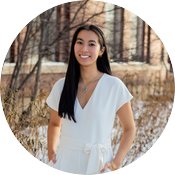
Dean E. Freeman Award
Priscilla Trinh | Bioproducts and Biosystems Engineering
Sustainable Systems Management Major
This medal is awarded to a graduating senior who has demonstrated an unusual sense of personal responsibility for the welfare of the University of Minnesota and its community.
The late Dean E.M. Freeman was noted for his constant interest in and devotion to all activities that promoted student leadership and self-development. Dean Freeman served as the Dean of the College of Agriculture, Forestry, and Home Economics from 1917 to 1943. His service to students and to student development make it particularly appropriate that this award be entitled the Dean E.M. Freeman Medal.

Distinguished Extension and Outreach Award
John Chapman | Bioproducts and Biosystems Engineering
The Distinguished Extension/Outreach Award was established in the College of Food, Agricultural and Natural Resource Sciences to recognize those faculty and staff who (1) have made significant contributions to Extension/outreach education, and (2) have made a priority of engagement that links CFANS and the University of Minnesota to the citizens of the state. The Distinguished Extension/Outreach Award symbolizes the College's commitment to excellence in Extension/outreach education and recognizes individuals who substantially contribute to the spirit of engagement found in our land grant mission.
BBSEM Ph.D Candidate awarded the Doctoral Dissertation Fellowship

Chenxi Lin, a Ph.D. candidate in BBSEM, has been awarded the Doctoral Dissertation Fellowship.
The Doctoral Dissertation Fellowship (DDF) gives the University's most accomplished Ph.D. candidates an opportunity to devote full-time effort to an outstanding research project by providing time to finalize and write a dissertation during the fellowship year.
The award includes a stipend of $25,000 for the academic year (September-May) and tuition for up to 14 thesis credits each semester (Fall & Spring). Read more about Lin's research and what this fellowship means to him.